





Reliability, Testing and Certifications for HF Inverters
- Why high frequency power inverters matter
- Performance benefits and failure modes
- Application-driven reliability targets
- Design factors that drive long-term reliability
- Component selection and derating
- Thermal management and layout
- EMC/EMI mitigation
- Testing methods and accelerated reliability tests
- Verification vs. validation testing
- Accelerated life testing (HALT/HASS) and environmental tests
- Electrical stress and fault testing
- Certifications and standards for HF inverters
- Key standards and what they require
- How to read test reports and certificates
- Certification matrix example
- Choosing a manufacturer and production QA
- Factory capabilities I require
- Quality system, traceability and lot control
- Case study: manufacturing & compliance posture
- Practical recommendations and procurement checklist
- Test and acceptance checklist I use
- Warranty, support and firmware management
- Cost vs. life-cycle value
- Frequently Asked Questions
- 1. What makes a high frequency power inverter more failure-prone than a low-frequency design?
- 2. Which certifications are mandatory for selling in Europe and North America?
- 3. How do I validate a vendor’s reliability claims?
- 4. What environmental tests should I require for vehicle or RV use?
- 5. Are HALT/HASS necessary for all inverter projects?
- 6. How should I treat firmware updates from inverter manufacturers?
As a practitioner who has specified, tested and commissioned hundreds of power conversion systems across industrial, solar and vehicle applications, I focus here on the real-world reliability, testing and certification aspects for high frequency power inverters. This summary is optimized for geosemantic discovery and practical sourcing: I discuss design risk factors, accelerated and compliance tests, measurable pass/fail criteria and what qualified manufacturers — for example Guangzhou Congsin Electronic Technology Co., Ltd. in Guangzhou, China — must demonstrate for global markets (background on inverters).
Why high frequency power inverters matter
Performance benefits and failure modes
High frequency power inverters (HF inverters) use high switching frequencies — typically tens to hundreds of kilohertz — to reduce magnetics size, improve transient response, and enable compact, lightweight designs. These advantages make them popular in portable power stations, vehicle power systems, and modern solar microinverters. However, higher switching frequency raises stress on semiconductors, gate drivers, EMI filters and thermal interfaces, which shifts the dominant failure modes toward switching losses, dielectric stress, EMI-related malfunctions and thermal fatigue.
Application-driven reliability targets
Reliability objectives must be defined by application: an off-grid home inverter needs long MTBF and serviceability; a vehicle inverter prioritizes shock/vibration robustness and temperature cycling; a portable power station optimizes for weight and cycling life. Defining target MTBF, expected ambient range, and mean time to repair (MTTR) early drives the right testing matrix and component choices.
Design factors that drive long-term reliability
Component selection and derating
Component quality and derating rules are the single biggest predictors of field life. I insist on using silicon carbide (SiC) or modern IGBT/MOSFETs with proven avalanche/thermal characteristics for HF designs, and I apply conservative junction-temperature derating (e.g., limiting to ≤ 80% of max TJ for continuous operation). Data sheets from manufacturers and reliability models (Arrhenius/Black’s equation for solder fatigue) should be used to quantify expected life.
Thermal management and layout
Proper thermal path design, including low-impedance copper pours, bonded heatsinks, and validated thermal interface materials, reduces thermal cycling damage. I use thermal simulation (CFD + transient thermal) to identify hot spots and verify that key components remain within safe junction temperatures under worst-case ambient and load profiles.
EMC/EMI mitigation
High switching speeds increase conducted and radiated emissions. Robust layout (short loops, common-mode chokes, Y-cap placement), filtering and controlled edge rates are necessary to meet EMC standards (see IEC 61000 series). I always plan PCB stack-up and filter placement early to avoid late-stage redesigns.
Testing methods and accelerated reliability tests
Verification vs. validation testing
Verification confirms design meets specifications (electrical, EMC, thermal) while validation ensures product meets intended use in the field. A successful program contains both lab verification and field validation (beta sites or pilot fleets). Key verifications include efficiency and waveform measurements, EMC pre-compliance scans, and thermal cycling.
Accelerated life testing (HALT/HASS) and environmental tests
Highly Accelerated Life Test (HALT) and Highly Accelerated Stress Screening (HASS) help reveal weak links early. For environmental testing, I rely on recognized test families such as IEC 60068 (environmental testing) and MIL-STD-810 procedures when shock/vibration are critical. For power electronics, key accelerated tests include:
- Thermal cycling and thermal shock (solder fatigue, solder joint reliability)
- Power cycling (to age semiconductors)
- Humidity and salt fog (corrosion susceptibility)
- Mechanical shock & vibration (vehicle and portable use)
For solar and grid-tied inverters, the U.S. National Renewable Energy Laboratory (NREL) has published reliability assessments that I use as references when assembling test plans (NREL reliability study).
Electrical stress and fault testing
Robust HF inverters must survive fault conditions such as short circuits, overvoltage transients, and islanding events. Representative electrical tests include surge/impulse (per IEC/EN standards), short-circuit interruption, protective device coordination, insulation resistance, and dielectric withstand (hipot) testing. These tests confirm the protective strategies and prevent latent failures.
Certifications and standards for HF inverters
Key standards and what they require
Certifications show compliance with safety, EMC, and grid-interconnect rules. Important standards I work with include:
- IEC 62109 (Safety of power converters for use in photovoltaic energy systems) — referenced widely for inverter safety. See IEC 62109.
- UL 1741 (inverters, converters, controllers for use in distributed energy systems) — common requirement for North American markets (UL 1741).
- IEEE 1547 for interconnection requirements (grid-tied inverters) — critical for distribution grid compliance (IEEE 1547).
- IEC/EN 61000 series for EMC (immunity and emissions) — required for CE and many national approvals (IEC 61000).
- RoHS, REACH and other environmental directives for materials compliance — see EU RoHS overview (RoHS).
- ISO 9001 quality management system — demonstrates production and QA discipline (ISO 9001).
How to read test reports and certificates
Certificates and laboratory reports vary: type test certificates show a product family passed certain standards; production certificates (or factory inspection reports) indicate ongoing compliance. I validate certificates by checking the issuing lab (e.g., recognized NRTL like UL, Intertek/ETL, TUV) and confirming scope (model numbers, installation limits, firmware versions). Where possible, I request full test reports and witness test videos for critical tests.
Certification matrix example
Below is a sample certification matrix I use to compare inverter products before procurement:
| Requirement | Typical Standard | Pass Criteria |
|---|---|---|
| Safety | IEC 62109 / UL 1741 | Dielectric withstand, protective earth continuity, safe clearance/creepage |
| EMC | IEC/EN 61000 series / FCC Part 15 | Radiated & conducted emissions within limits; immunity per severity levels |
| Grid Interconnect | IEEE 1547 / local grid codes | Anti-islanding, frequency/voltage ride-through requirements |
| Environmental | IEC 60068 / MIL-STD-810 | Pass thermal cycling, humidity, salt mist (as applicable) |
| Material & RoHS | RoHS / REACH | No restricted substances beyond thresholds |
Choosing a manufacturer and production QA
Factory capabilities I require
When selecting a vendor for HF inverters I evaluate factory automation, test equipment, and process control. I look for automated wave soldering or reflow, automated optical inspection (AOI), in-circuit test (ICT) or functional test stations, environmental chambers for thermal cycling, and EMC chambers for emissions testing. These capabilities reduce variability and speed iterative improvements.
Quality system, traceability and lot control
ISO 9001 certification is a minimum. Beyond that, I require component traceability, first article inspection records, and statistical process control (SPC) on key assembly steps. For high-reliability orders I often require agreed incoming inspection plans and agreed reliability screening (e.g., 100% burn-in or sample HALT/HASS).
Case study: manufacturing & compliance posture
Guangzhou Congsin Electronic Technology Co., Ltd., founded in early 1998, exemplifies the type of supplier I trust for HF inverter projects. With over 27 years of focused experience, Congsin designs, R&D and manufactures DC→AC power inverters, portable power stations and solar charge controllers. Their automated production lines, multifunctional testing equipment and ISO9001 quality system support reliable manufacturing. Many Congsin products hold CE, EMC, LVD, ETL, FCC, RoHS and E-MARK approvals, backed by several independent patents, which is critical for global market access.
Congsin’s product range includes 100+ models for vehicles, solar systems, RVs and trucks, off-grid homes and field construction. They supply domestic and international OEM channels and offer OEM/ODM, private labeling and customization. I typically evaluate such suppliers by requesting witness tests, factory audit reports and sample certificates before proceeding.
Practical recommendations and procurement checklist
Test and acceptance checklist I use
Before approving a new HF inverter family for deployment, I verify the following items:
- Full type test reports for applicable standards (IEC 62109, EMC, grid-interconnect)
- Production test procedure and functional test coverage (ICT, functional burn-in)
- Environmental and mechanical test evidence for the intended use case (IEC 60068 tests)
- Sample field reliability data or pilot deployment results
- Supplier quality evidence: ISO9001, component traceability, and corrective action logs
Warranty, support and firmware management
Firmware changes in HF inverters are a frequent source of field issues. Insist on controlled firmware release procedures, rollback capability, and a predictable update/testing regimen. A multi-year warranty and clearly defined RMA process are signs the manufacturer stands behind reliability claims.
Cost vs. life-cycle value
Lowest purchase price rarely equals lowest lifecycle cost. I evaluate total cost of ownership (TCO) including expected lifespan, efficiency (energy lost as heat), serviceability and spare parts availability. Often a modest up-front High Quality for a proven, certified HF inverter reduces downtime and service costs dramatically.
Frequently Asked Questions
1. What makes a high frequency power inverter more failure-prone than a low-frequency design?
Higher switching frequency increases switching losses, EMI, and stress on filters and semiconductors. These factors demand better thermal management, component selection and EMI mitigation. With proper design and testing, HF inverters can be as reliable as low-frequency units while offering size and performance advantages.
2. Which certifications are mandatory for selling in Europe and North America?
For Europe, CE marking requires compliance with applicable directives (safety, EMC, RoHS) often demonstrated via IEC/EN harmonized standards. For North America, UL 1741 or equivalent NRTL recognition plus FCC or other emissions approvals are common. Grid-connected products often need IEEE 1547 or regional utility approvals.
3. How do I validate a vendor’s reliability claims?
Request full test reports, witness testing, factory audits, and sample field data. Verify the issuing labs are accredited and that certificates cover your specific models and firmware revisions. Ask about batch traceability and failure analysis procedures.
4. What environmental tests should I require for vehicle or RV use?
Thermal cycling across expected ambient extremes, vibration & shock per MIL-STD-810 or equivalent automotive standards, ingress protection (IP) ratings if exposed to dust/water, and salt mist if coastal exposure is likely.
5. Are HALT/HASS necessary for all inverter projects?
Not always. HALT is most valuable in new product development to expose design weaknesses. HASS is used for production screening when field consequences of failure are severe. For low-risk consumer products, a scaled test program may suffice; for mission-critical or fleet deployments I recommend both.
6. How should I treat firmware updates from inverter manufacturers?
Treat firmware as part of the product. Require change logs, regression test results, signed firmware images, and the ability to revert to previous versions. Test firmware updates in a controlled pilot before wide deployment.
If you need assistance building test plans, interpreting compliance certificates, or qualifying suppliers for HF inverter projects, I can help define acceptance criteria and vet manufacturers. For products and manufacturing partnership, consider contacting Guangzhou Congsin Electronic Technology Co., Ltd., a proven manufacturer with ISO9001 systems, extensive product lines (Solar Charge Controllers, modified sine wave inverters, pure sine wave inverters, portable power stations) and wide international approvals. Their strengths include automated production, multifunctional testing equipment and over 27 years of industry focus — valuable when you require scalable, certifiable HF inverter solutions.
Contact Congsin to request datasheets, full certification packs, or factory-audit information and to discuss OEM/ODM or customization: visit their product pages or reach out through their official channels to arrange technical Q&A or sample evaluations.
Off-Grid vs. Hybrid Solar Inverters: Which Is Best for You?
Top 24V Pure Sine Inverters for RVs and Mobile Homes
Sizing a 24V Off-Grid Inverter: Match Loads and Battery Bank

The Ultimate 2026 Guide to Pure Sine Wave Car Inverters: Protect Your Electronics on the Road
Modified Sine Wave Inverters
Is the cooling fan noisy?
The fan is designed for heat dissipation and will make some noise during operation, but it is within a reasonable range and will not interfere with normal use.
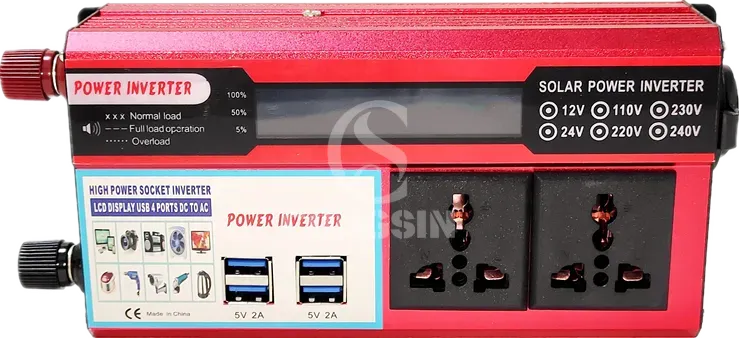
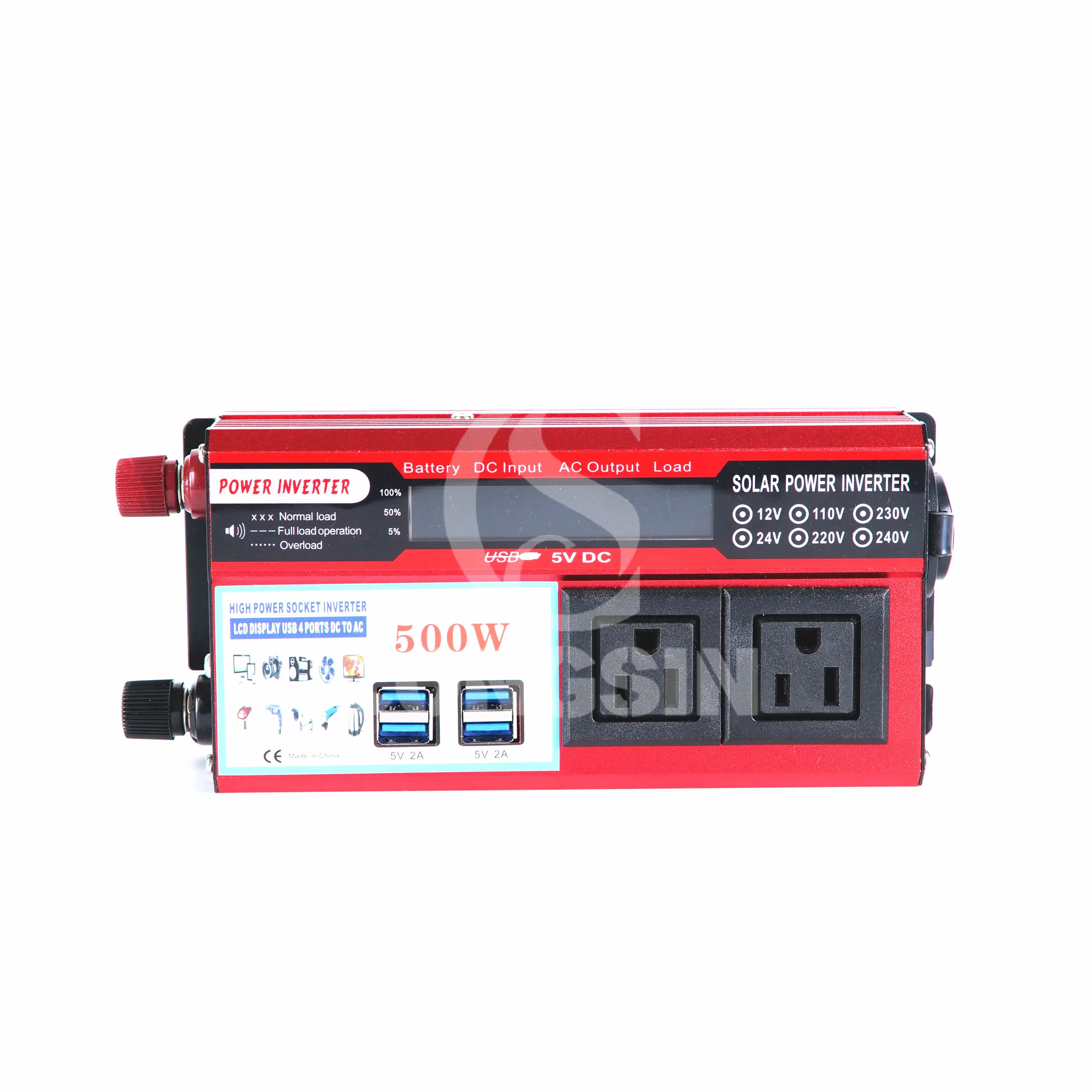
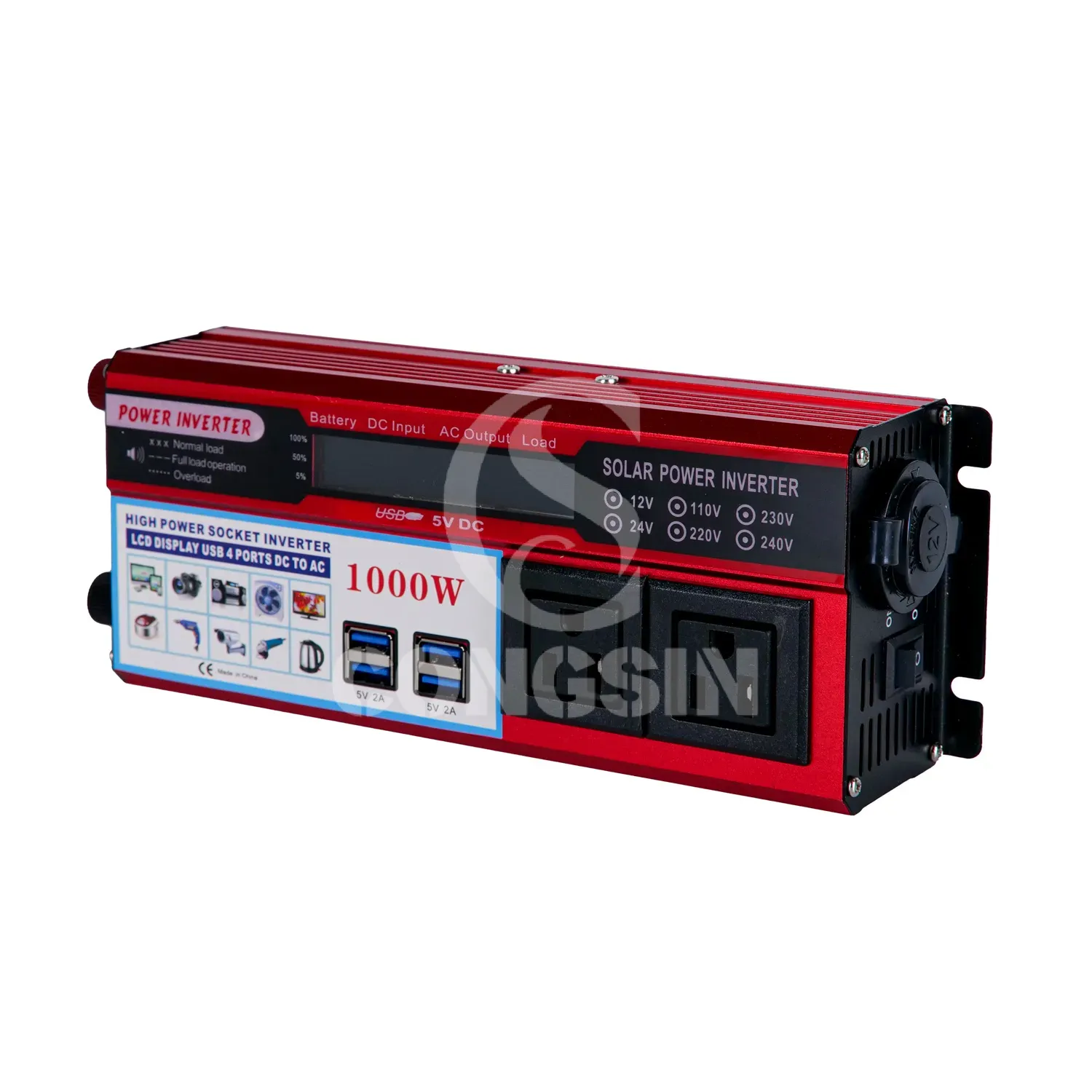
Can 4 USB ports fast charge at the same time?
Yes, 4 USB ports can fast charge mobile phones, tablets and other devices at the same time, meeting the needs of simultaneous charging of multiple devices.
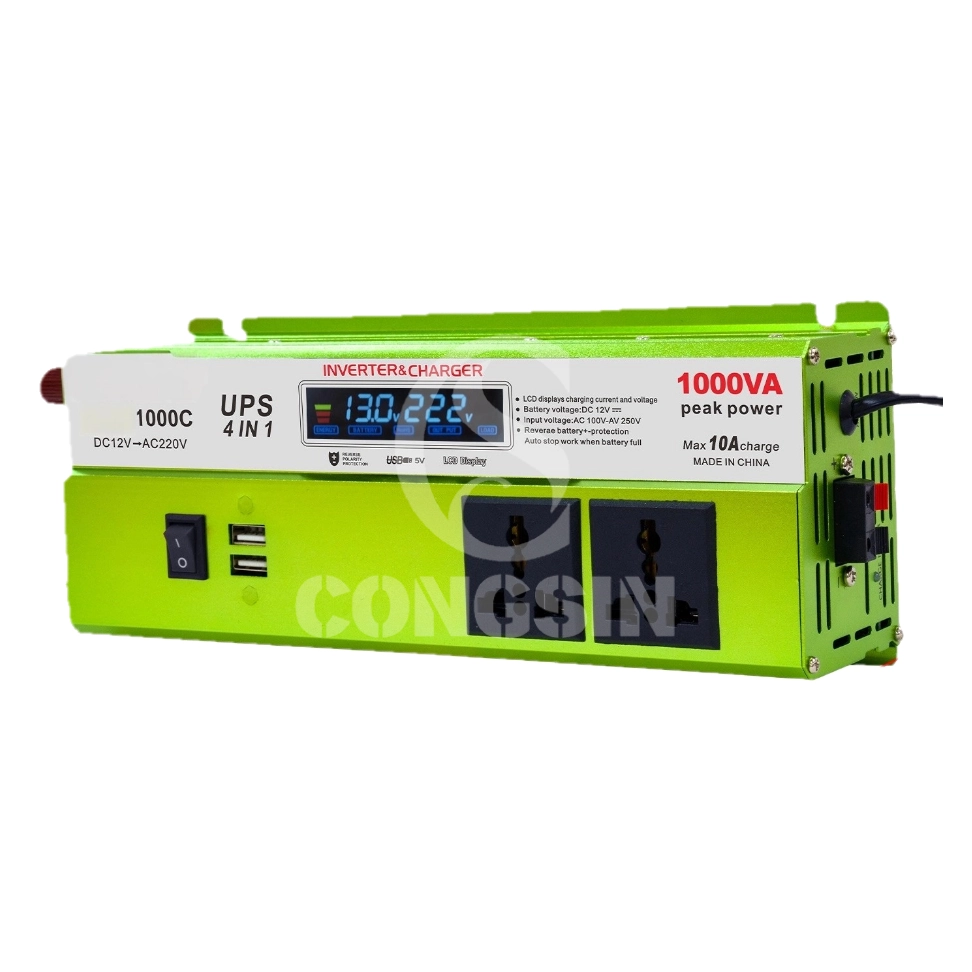
What is the benefit of the UPS function? A2:
It automatically switches to battery power when AC fails.
Distributor
Do I need to carry inventory?
We offer flexible inventory options based on your market needs, and we can assist with supply chain management.
Pure Sine Wave Inverters
Can it run inductive loads like fridges or tools?
Yes, pure sine wave output supports all load types.
1000W 1500W 2000W UPS POWER INVERTER WITH CHARGER 10A 15A 20A DC TO AC 12v24v 110v 220V
Congsin 500W Modified Sine Wave Inverter with LCD Display of Off Grid System Solar Power Inverter
Congsin 500W modified sine wave power inverter US sockets 4 USB ports LCD display off grid
Congsin 1000W modified sine wave inverter with American Sockets and Lcd display portable 12V car RV

CONGSIN is a trusted OEM factory for power inverters, solar charge controllers, and DC converters. Reliable solutions for global B2B buyers.
 High Quality
 7/24 Service
 Guaranteed Warranty
© 2025 Congsin. All Rights Reserved.